Château Paradis Casseuil

The vintage
The 2023 vintage was characterised by an early growing season and contrasting weather conditions. Following a winter close to average, with sufficient rainfall and slightly cooler-than-average temperatures from mid-January to mid-March, budburst occurred in late March. The warm, wet spring favoured good flowering and fruit set, but also led to very high downy mildew pressure. Storms in late June exacerbated the damage in some plots that had already been affected. Veraison began in late July, followed by a ripening period marked by water stress and several spells of intense heat in August and early September. The Merlots were harvested from 8 September, followed by the Cabernets, with harvesting continuing until 21 September. A demanding vintage that once again demonstrates that quality does not necessarily go hand in hand with ease.
Location
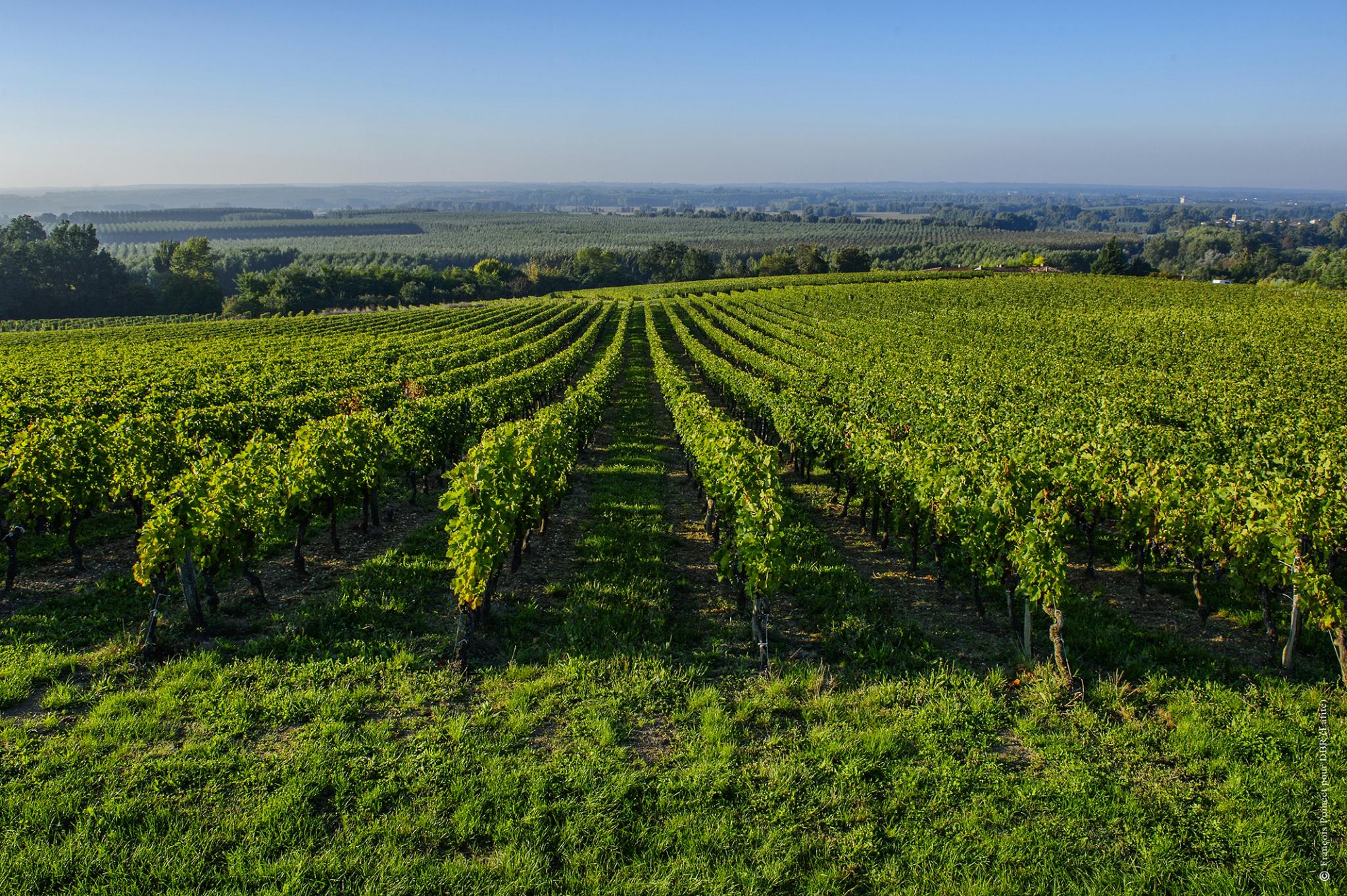
Château Paradis Casseuil extends over approximately 60 hectares in the heart of the Entre-deux-Mers, south-east of Bordeaux. Spread across three communes in a patchwork of vineyard plots, the estate follows the region's characteristic rolling landscape.
Terroir
The terroir of Château Paradis Casseuil consists mainly of Agenais molasse, a geological formation typical of the Entre-deux-Mers plateau, alongside several limestone areas. Across the different vineyard plots, the soils display a wide variety of profiles: sandstone limestone, marl, clay with limestone nodules and variegated magnesian molasse. Generally rich in calcium, these soils offer good porosity while retaining a degree of freshness, encouraging deep root development.
Winemaking
The grapes are received on a vibrating sorting table, then the berries are sorted and crushed before being transferred into vats previously inerted with carbon dioxide. Alcoholic fermentation begins at approximately 23°C, with the temperature gradually rising to 25°C. During the first few days, two pump-overs are carried out daily, one in an open system and the other in a closed vat. Halfway through fermentation, a rack-and-return operation may be performed: the juice is drawn off from the vat before being returned over the cap, allowing for gentler and more even extraction. Colour and tannin extraction are adjusted daily according to tasting assessments. After fermentation, the wine continues to macerate on the skins for 4 to 5 days, with a gentle supply of oxygen. This stage helps soften the tannins and gives the wine added roundness. Its duration is adjusted according to the potential of each vat. Between 16 and 20 days after the grapes are placed in the vats, the free-run wine is drawn off, the pomace is gently pressed the following day. Malolactic fermentation follows, occurring either spontaneously or through the addition of lees from vats in which it has already taken place. The wine then continues to mature in vats until bottling.
Grapes
Tasting
Deep, intense colour.
This wine reveals a remarkable balance of richness, fruit and freshness. The palate is structured, with pronounced tannins that lend definition and depth to the whole.
Downloads